


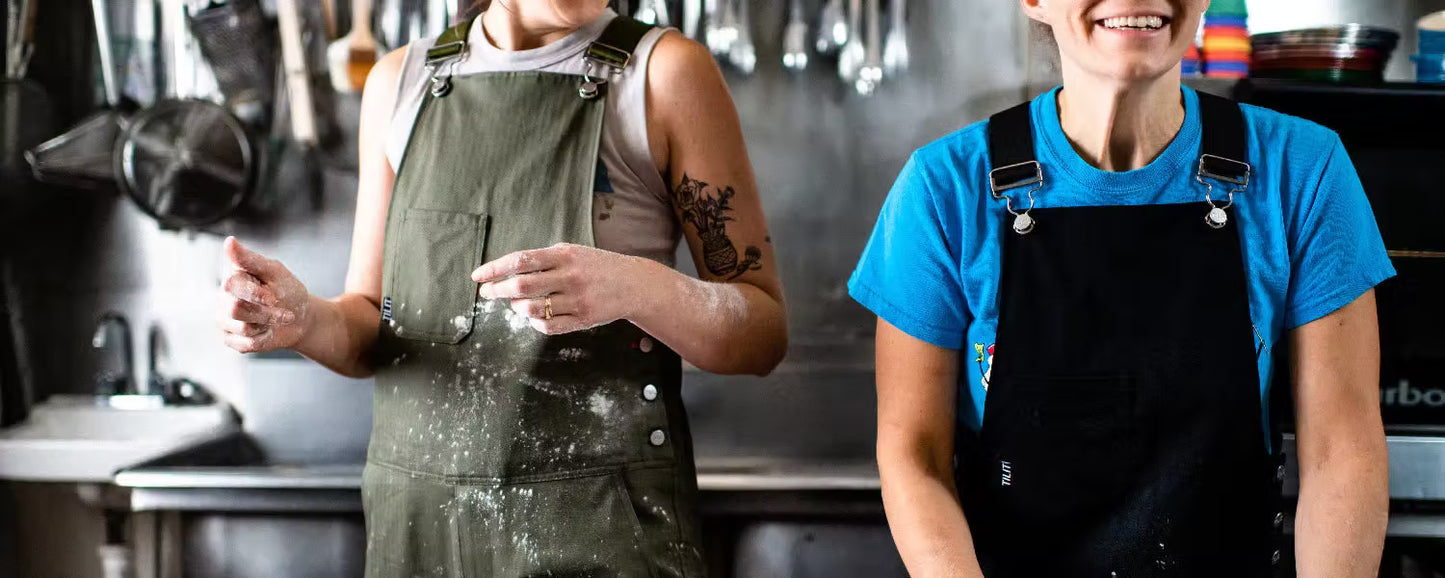

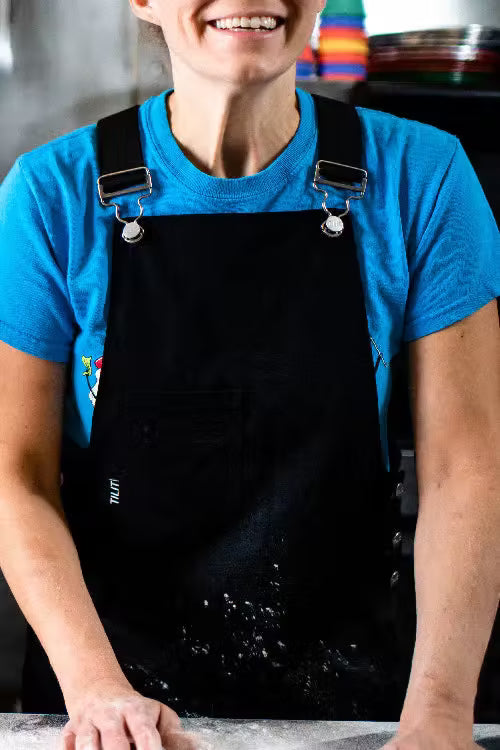
A tighter uniform program starts with role clarity
Outfitting a restaurant team gets easier when you stop thinking in “tops and bottoms” and start thinking in stations, heat zones, and guest visibility. Build the uniform like you build the line: clear roles, repeatable setup, fewer variables. TILIT is chef-founded (2012) and designs gear with the details that actually show up mid-service: smart pocket placement, apron-strap integration, and closures you can work fast.
Start here: map roles, then pick a uniform lane for each
- BOH (prep, hot line, pastry): prioritize airflow, sleeve choice, and movement. Decide what needs to stay crisp on the pass versus what needs to stay out of your way at the range.
- FOH (server, bartender, host): prioritize pocket utility, consistent silhouette, and a color story that photographs clean under your lighting.
- Leadership and open kitchen: choose a sharper top that reads as composed while still moving like workwear. A good starting point is collared chef workshirts when you need structure without feeling boxed in.
Selection questions that prevent uniform program drift
- How hot is the station, really? If you run a high-heat line, decide up front whether your standard is short sleeve or long sleeve. Do not leave it to individual preference if you want the floor to read consistent.
- What has to be on-body all shift? Pens, wine keys, towels, thermometers, phones, notepads. Choose garments with storage that matches the role so staff are not improvising.
- How will aprons sit on the team? Shirt details that manage straps and keep fabric from bunching reduce constant adjusting during service.
- Do you need two fit paths? If you want your program to be “a fit for everyone,” plan your size run and fits on day one. For pants, many teams standardize a look while stocking both women’s fit chef pants and men’s chef pants.
Compare Restaurant Uniform Options
| Product line | Best for | What to consider | Explore |
|---|---|---|---|
| Chef Workshirts | BOH teams that want a modern uniform shirt with practical details. | Look for features like apron-strap tabs and hidden pockets so the shirt stays clean and functional through service. | Explore |
| Chef Coats | Leadership, expo, and any station that needs the classic coat silhouette. | Snap closures help with fast changes and quick resets; prioritize breathability if you are in an open kitchen. | Explore |
| Short Sleeve Chef Coats | High-heat lines where airflow and free forearms matter. | Short sleeves are the simplest cooling move. If you stock both sleeve lengths, set a clear station rule so the team reads consistent. | Explore |
| Chef Pants | BOH and leadership who need breathable, machine-washable pants built to move. | Decide your core silhouette and keep the size run predictable for reorders. (Many styles run inclusive sizing, 28–44.) | Explore |
| Server Aprons | Servers and bartenders who work out of their pockets all shift. | Deep pockets that hold tools without sagging matter more than extra styling. Keep the strap setup consistent across the team. | Explore |
| Black Chef Hats | Any restaurant that wants a unified finish across stations. | Black keeps the look composed through splatter-heavy services; adjustable closures help you stock fewer SKUs. | Explore |
Next steps: turn choices into a reorderable system
Once you have your core kit, keep it tight. Lock 1–2 colors, define station rules (especially sleeves and aprons), and write down your size run so onboarding stays smooth. If your operation includes guest-facing spaces beyond dining, align your look across the property with hotel uniforms so staff can move between spaces without changing the brand read.
For managers and trainers carrying tools between locations or shifts, a dedicated bag keeps the uniform clean and the kit organized. If that is part of your day, look at The Chef Backpack as a single, repeatable solution your team can standardize on.
Frequently Asked Questions About Restaurant Uniforms
What is a solid starting point for BOH uniforms when we need a clear, leadership-ready look?
Start with Chef Coats when you want a recognizable silhouette that still moves like workwear. Prioritize snap closures for speed and fabrics that breathe well in your heat zones.
What should we standardize for the hottest stations on the line?
Standardize Short Sleeve Chef Coats for high-heat stations where airflow and unobstructed arms matter. If you also stock long sleeve, tie it to a station rule so the uniform reads consistent.
Which apron category is most practical for servers and bartenders?
Server Aprons. Build FOH around pocket utility and a clean silhouette. Deep pockets that hold pens, towels, and notepads without shifting keep the floor moving.
Can we add names or a logo while keeping the base uniform the same?
Yes. Use Custom Embroidered Aprons to add identity without changing your core garment choices. It is a straightforward way to keep the program consistent while making roles and staff easy to read.
How do we keep an apron program consistent across FOH and BOH?
Pick one core family from Aprons, then assign variations by role (FOH pocket-forward, BOH coverage-forward) while keeping color and strap style consistent. Pair that with a single pant plan from Chef Pants so reorders stay predictable as your team grows.